Comparing clinical de-identification pipelines in Spark NLP for speed and accuracy, covering NER, hybrid, and zero-shot approaches on CPU and GPU infrastructures.
A single short GPT-4o query consumes 0.43 Wh of electricity. Scale that to 700 million queries per day, and the annual electricity consumption equals 35,000 U.S. residential households, or 50...
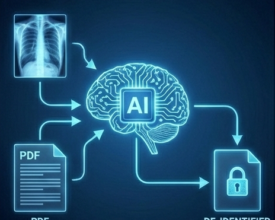
Visual de-identification is the process of detecting and masking protected health information (PHI) inside scanned medical documents, images, and PDFs. PHI in visual documents can appear in printed headers, stamps,...
How is AI improving hospital capacity forecasting? Hospital systems face constant pressure to balance patient demand with finite resources. AI-driven capacity forecasting provides hospitals with the predictive intelligence needed to...
TL;DR Summary As AI becomes embedded in clinical workflows, hospitals must transition from "trust by default" to a Zero Trust AI (ZTAI) architecture. This approach treats AI models and their...


















 Demos
















 See More